

Which DJI Drone to Choose in 2026? Camera and FPV Guide

Choose a DJI drone by the shots you want to make. Compare compact travel models, camera platforms and FPV setups before deciding on a complete kit.
There is no single best DJI drone for every pilot. A travel camera, an FPV setup and a production drone solve different problems. Compare the footage you want to deliver, the equipment you will carry and the time you can spend learning the system.
Start with the kind of footage
For conventional aerial photography, assess the camera and how you frame a shot. For immersive movement, evaluate an FPV workflow. For personal clips, simplicity may matter more than a long list of manual controls. These are selection priorities, not a ranking based on a single specification.
| Model | Useful starting point | Before buying |
|---|---|---|
| DJI Neo 2 | Quick personal clips and a simple starting workflow | Check the controller or motion-control equipment in the exact combo. |
| DJI Flip | Portable filming with an emphasis on straightforward capture | Compare the kit and the shots you want to make. |
| DJI Mini 5 Pro | Travel and a capable main camera in a compact body | Check the standard or Plus battery configuration. |
| DJI Avata 2 | Immersive FPV footage | Budget for compatible goggles, control equipment and practice. |
| DJI Air 3S | Camera work with more than one perspective | Assess whether the camera options justify the larger field kit. |
| DJI Mavic 4 Pro | Demanding photo and video work with three focal lengths | Plan for the larger kit, media and editing workflow. |
Travel: compact kit or more camera options?
A smaller aircraft is easier to carry, but include the controller, batteries and charger when comparing bag size. If you regularly need a longer focal length, compare an Air or Mavic setup rather than assuming digital cropping will replace a different camera perspective.
Mini 5 Pro has a 1-inch 50 MP main camera, while Mavic 4 Pro uses three cameras, including a 100 MP Hasselblad main camera. Those specifications describe different capture options; they do not guarantee a better finished film without planning and suitable light.
FPV is a different workflow
Avata 2 is worth considering when the immersive flying style is the objective. Check compatibility between the aircraft, goggles and control equipment. Allow time to practise in an appropriate environment before planning demanding shots. A conventional camera drone and an FPV aircraft should not be treated as interchangeable.
Compare the complete cost of ownership
- Controller, goggles and any compatible motion-control equipment.
- Battery count, charging equipment and power available in the field.
- Transport, spare propellers and storage media.
- The time needed for learning, capture and editing.
Do not choose from headline flight time alone
Manufacturer maximums use defined test conditions. A useful comparison includes the time required to reach the shot, film it, return and land with reserve. Likewise, transmission distance is not permission to operate beyond the limits applying to your flight.
Registration and operating requirements
A lightweight camera drone is not automatically registration-free. In the EU, non-toy camera drones generally require operator registration. Check the class label, battery configuration, local airspace and national guidance before flying.
Choose your setup at KopterWorx
Compare Mini 5 Pro, Air 3S, Avata 2 and Mavic 4 Pro at KopterWorx. Choose the kit around your actual shots.
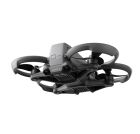 DJI Avata 2 Fly More Combo (Three Batteries)1.017,48 EUR 834,00 EUR
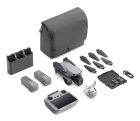 DJI Air 3S Fly More Combo (DJI RC 2)1.598,20 EUR 1.310,00 EUR
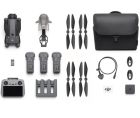 DJI Mavic 4 Pro Fly More Combo (DJI RC 2)2.727,92 EUR 2.236,00 EUR
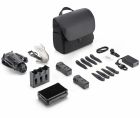 DJI Mavic 4 Pro 512GB Creator Combo (DJI RC Pro 2)3.578,26 EUR 2.933,00 EUR
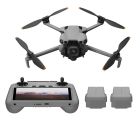 DJI Mini 5 Pro Fly More Combo (DJI RC2)1.128,50 EUR 925,00 EUR
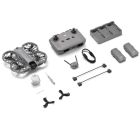 DJI Neo 2 Fly More Combo398,94 EUR 327,00 EUR
Powered by Mirasvit Magento 2 Extensions
-
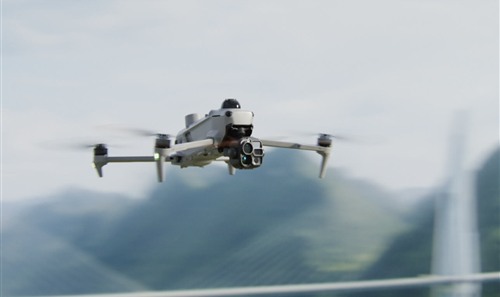 DJI Matrice 5T Is Here: 59 Minutes, Native 1K Thermal and IP55
-
 Drone as First Responder: How DJI Dock Changes Alarm Response
-
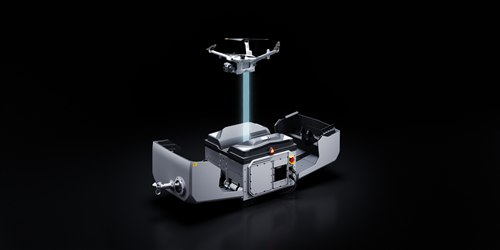 DJI Dock 4 and Matrice 5TD: What 25-Second Battery Swaps Change
-
 DJI Matrice 400 vs Matrice 350 RTK – Complete Comparison
-
 DJI Zenmuse L2 vs L3: Which LiDAR System Is Right for You?